Get free quotes from chimney inspection near you
Takes about a minute. Free, no obligation; providers reply to you directly.
I got a phone call at 9 PM on a Tuesday.
My neighbor was panicking because black soot was backing up into his fireplace, and he’d just hired someone who told him the chimney “probably needed rebuilding” — a $4,000 job. He asked if I knew anyone trustworthy. I didn’t. So I started making calls.
What I found was a mess: unlicensed contractors calling themselves “chimney specialists,” CSIA-certified professionals with pristine credentials who were booked six months out, and a handful of folks who seemed competent but couldn’t articulate why. Nobody had a clear framework for what actually matters when you’re hiring someone to inspect the thing that vents dangerous gases from your home.
That’s the problem nobody warns you about. Chimney inspectors operate in a weird middle ground where certification exists but isn’t always required, where “experience” is hard to verify, and where the financial stakes are real — bad advice can cost you thousands, and missed problems can kill you.
Here’s how to cut through it.
The Short Version:Hire a CSIA-certified inspector who’s been in business for at least 5 years, ask for references from real estate agents or past clients, and get a written scope of work before anyone touches your chimney. If they can’t explain the difference between a Level 1 and Level 2 inspection, move on.
Key Takeaways
- CSIA certification isn’t mandatory but it’s the closest thing to a quality standard that exists — uncertified inspectors can be fine, but you’re betting on their integrity instead of their training
- Most homeowners need a Level 1 (visual) inspection annually; Level 2 (camera-based) only matters during real estate transactions or if Level 1 flags a problem
- Red flags are obvious once you know what they are: vague pricing, refusal to provide references, pressure to do extra work, and anyone who doesn’t ask about your heating source
- The five questions below will reveal whether someone actually knows their job or is just confident
What Certification Actually Means (And What It Doesn’t)
Let’s get the uncomfortable part out of the way: you don’t legally need a CSIA card to call yourself a chimney inspector in most states.
That’s a problem. But it’s also a lever you can use.
The Chimney Safety Institute of America (CSIA) runs a rigorous credentialing program. Their inspectors pass written exams, maintain liability insurance, agree to a code of ethics, and renew their certification annually. It’s not perfect — no system is — but it’s the closest thing we have to a quality floor.
Here’s the reality check: A CSIA-certified inspector has demonstrated baseline competence. They’ve studied creosote buildup, flue deterioration, CO hazards, and the National Fire Protection Association (NFPA) 211 standard that governs chimney safety. They know the difference between a Level 1 inspection (visual) and a Level 2 (camera-based scan of the entire flue), and they know when each one is actually necessary.
An uncertified inspector might be fantastic. They might also be a handyman with a ladder and confidence.
Reality Check:Certification doesn’t guarantee honesty or quality long-term relationships. It just means someone passed a test and maintains insurance. The difference between a certified pro and a good uncertified one often comes down to track record and how they talk about their work.
The Five Questions That Separate Pros From Pretenders
Ask these in order. The answers will tell you everything.
1. What type of inspection do I actually need, and why?
A competent inspector will ask about your situation first. Do you heat with a wood fireplace? Gas insert? Oil? Have you had work done recently? Are you buying a house? The answer determines what type of inspection makes sense.
- Level 1 (visual, $100–$250): Annual maintenance. Creosote buildup, obvious damage, basic safety check.
- Level 2 (camera-based, $250–$400): Real estate transaction, or if Level 1 found something suspicious. Gets inside the flue.
- Level 3 (invasive inspection, $500–$1,500): Rare. Only when you suspect serious structural damage and need to physically access the flue.
If they immediately recommend Level 3, or if they can’t explain why Level 1 is usually sufficient for annual maintenance, they’re either overselling or they don’t know the standard.
2. Are you CSIA-certified? If not, why?
Listen to how they answer. A good uncertified inspector will say something like, “I’m not, but I work with [certified company] on complex jobs,” or “I’m scheduled for certification in [month].” A bad one will get defensive or change the subject.
3. Can you walk me through what a Level 1 inspection includes?
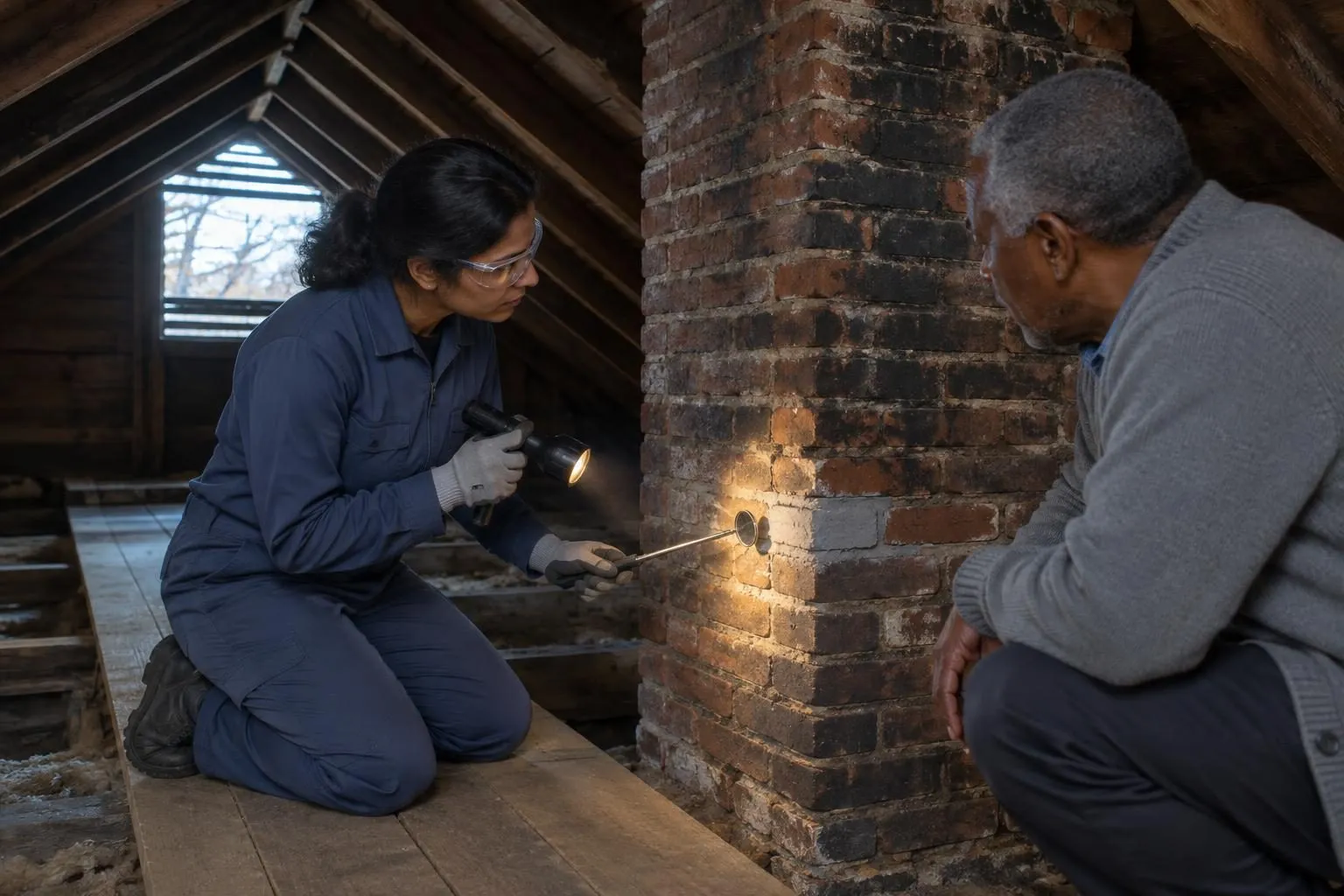
They should mention: visual inspection of the interior and exterior, checking for creosote, assessing flue damage, verifying draft, inspecting the chimney cap and crown, and reviewing any safety hazards. If they sound like they’re reading from a script, fine. If they sound confused, next.
4. What do you find most often, and what’s the biggest mistake homeowners make?
This separates experienced professionals from newcomers. Seasoned inspectors have patterns. They’ll tell you something like: “Eighty percent of the problems I see come from missing or degraded chimney caps — people don’t realize that prevents water damage,” or “The biggest mistake is waiting too long between cleanings and not understanding that creosote buildup is a fire hazard, not just a draft issue.”
Generic answers = generic experience.
5. Can I speak with three references — preferably two from real estate agents and one homeowner?
Real estate agents are your quality control system. They book inspectors repeatedly, they see patterns, and they have zero tolerance for disasters. If an inspector does solid work, agents know about it. If they’ve caused problems, agents remember.
Anyone who hesitates to provide references, or who only offers friends and family, is hiding something.
Certified vs. Uncertified: The Real Comparison
| Factor | CSIA-Certified | Uncertified |
|---|---|---|
| Training | Passed written exam on NFPA 211, flue types, hazard ID | Varies — may be self-taught or apprenticed |
| Liability Insurance | Required | Often not in place |
| Code of Ethics | Yes; violations can result in decertification | No formal accountability |
| Annual Renewal | Must renew; staying current is mandatory | No requirement to update knowledge |
| Price | Usually $150–$400 for Level 1 | Sometimes cheaper, sometimes the same |
| Best For | Real estate transactions, complex issues, peace of mind | Routine maintenance if you have strong references |
| Risk Level | Low — standards are enforced | Medium to high — depends entirely on the individual |
Pro Tip:If cost is the deciding factor, hire the uncertified inspector for routine cleanings and get a CSIA-certified pro for the inspection before you buy a house. That’s where the stakes are highest.
Red Flags That Should Make You Walk Away
Vague pricing. “I’ll know the cost when I see it” is a negotiation trap. Get a written quote that breaks down inspection type, scope, and what’s included. Period.
Pressure to upsell immediately. A thorough Level 1 inspection takes 45 minutes to an hour. If someone finishes in 15 minutes and starts pitching you a $3,000 rebuild, they either skipped steps or they’re hunting commission.
Can’t explain why your chimney needs what they’re recommending. “Trust me, you need it” isn’t an answer. Competent inspectors show you the problem, explain the safety implications, and give you options. They’re comfortable if you get a second opinion.
No written documentation. You should get a detailed report with photos, notes on the flue condition, any hazards, and clear recommendations. If they hand you a one-page summary or worse, a verbal report, that’s a sign they’re not running a real operation.
Won’t provide references or licenses. This is non-negotiable. Ask to see their CSIA card (if certified) and get three references. If they push back, they’re the problem.
Nobody asks about your heating system. A professional always asks: Wood? Gas? Oil? Pellets? Your fuel type changes everything about what they’re looking for. If they skip this, they’re running on autopilot.
Practical Bottom Line
You’re hiring someone to assess whether a critical home system is safe. This isn’t a “whoever answers first” situation.
Here’s the move:
-
Get three quotes from CSIA-certified inspectors in your area. If certified pros aren’t available or you’re doing routine maintenance, add one uncertified option with strong references.
-
Ask all five questions above before scheduling. This takes 10 minutes and will eliminate at least half the options.
-
Check references, especially from real estate agents. One call to a local agent who’s used multiple inspectors will give you instant credibility signals.
-
Get everything in writing — scope of work, pricing, what the inspection includes, when you’ll get the report.
-
Expect to pay $150–$400 for a Level 1 inspection. If someone’s way cheaper, ask why. If someone’s way more expensive, ask what extra value you’re getting.
The goal isn’t to find the cheapest option. It’s to find someone who knows their job, has skin in the game (certification, references, insurance), and will be honest with you even if honesty costs them a sale.
My neighbor ended up hiring a CSIA-certified inspector who’d been recommended by three different real estate agents. The Level 1 inspection took 90 minutes. The problem? A degraded chimney cap and minor creosote buildup — a $200 cap replacement and a cleaning, not a $4,000 rebuild.
That’s what competence looks like.
Want deeper context? Check out our Complete Guide to Chimney Inspectors for the full breakdown of inspection types, safety standards, and when you actually need professional help. And if you’re in the market for a new home, our guide on what real estate inspections actually catch includes the chimney component.
Done reading? Get quotes from chimney inspectors near you.
Takes about a minute. Free, no obligation; providers reply to you directly.
Popular cities: