Get free quotes from chimney inspection near you
Takes about a minute. Free, no obligation; providers reply to you directly.
I spent three hours on the phone with a chimney inspector last year, and it wasn’t because I’m obsessed with flues—it’s because I had no idea what to expect. He showed up, poked around for 45 minutes, told me I had a creosote problem, handed me a bill, and left. I spent the next week wondering: Was that thorough? Did he actually look at everything? Should I get a second opinion?
Turns out, I was asking the wrong questions because I didn’t understand the process at all.
Most homeowners don’t either. You call someone, they come out, they say “yep, needs cleaning” or “you’re good,” and you move on. But the actual hiring process—and what you should expect during an inspection—is way more structured than that. There are three different inspection levels, specific certifications that matter, and a timeline you need to plan for.
Here’s the step-by-step breakdown, because getting this right now saves you money and headaches later.
The Short Version:Call a CSIA-certified chimney inspector, confirm their credentials and availability, and expect to provide access to your chimney from both inside and outside. Level 1 inspections take 30–60 minutes and cost $100–$300; Level 2 takes 1–3 hours and runs $200–$400. Get everything in writing before they arrive.
Key Takeaways
- CSIA certification is non-negotiable. It’s the only credibility standard that matters in this industry.
- You need to know which inspection level you’re paying for—they’re not the same, and one might be overkill while another leaves gaps.
- Timeline varies by level—from 45 minutes to 5 hours depending on complexity.
- Have access ready—both to your chimney exterior and the interior fireplace/stove area before they arrive.
Step 1: Identify Your Inspection Level (Before You Call)
Here’s what most people skip: figuring out which inspection level you actually need.
The industry has three standardized levels, and they’re not optional labels—they’re defined by scope and purpose. Hiring the wrong one wastes time and money. Hiring too cheap and you miss real problems.
Level 1: Annual Maintenance (The Standard)
This is the baseline. You get a visual-only inspection of all visible areas—exterior masonry, the cap, crown, interior fireplace, damper, and a look into the flue using a flashlight and mirror. No cameras, no invasive poking.
Who needs it: Chimneys in regular use with no known issues. If you’re just doing annual maintenance because you burn wood or have a gas fireplace, this is your level.
Cost ballpark: $100–$300. Time: 30–60 minutes.
Level 2: When Something Changed (The Real One)
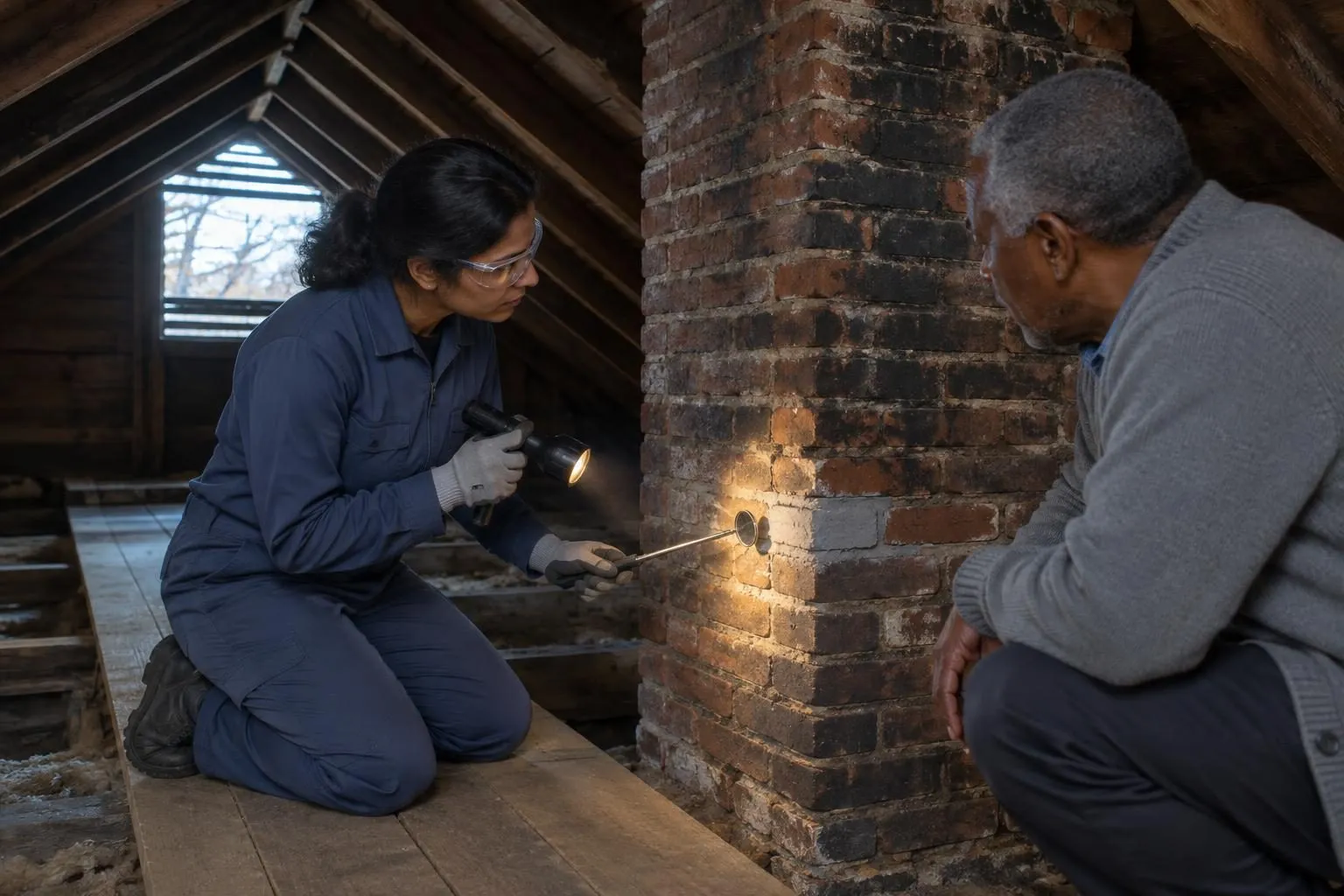
This is where the work gets serious. Level 2 includes everything from Level 1 plus video camera inspection of the interior flue, detailed assessment of the lining, masonry integrity, and hidden structural components. Inspectors will check attics or crawlspaces if needed.
Who needs it: You’re buying or selling a home. You just installed a new appliance. You had a chimney fire. There was an earthquake, severe weather, or a nearby building fire. You noticed operational problems (smoke backing up, weird odors).
Cost ballpark: $200–$400. Time: 1–3 hours depending on the number of flues and system complexity.
Level 3: Major Damage (The Deep Dive)
If substantial damage has occurred—a fire damaged the chimney, severe structural issues are visible, or seismic/weather events have compromised the system—you need Level 3. These can take up to 5 hours and involve full structural assessment.
Who needs it: Almost nobody in routine maintenance mode. You’ll know if you need this because something catastrophic happened.
Reality Check:Most homeowners hire Level 1 annually and call for Level 2 during real estate transactions. If a contractor suggests Level 3 without damage, get a second opinion.
Step 2: Verify CSIA Certification (Non-Negotiable)
Before you even schedule, confirm the inspector holds active CSIA certification.
The Chimney Safety Institute of America sets the industry standard. To get certified, professionals have to study extensively and pass a rigorous exam. They renew every three years. This certification means they know chimney systems, cleaning procedures, codes, and safety protocols. It’s the only credential that actually matters.
How to verify:
- Ask directly: “Are you CSIA-certified?”
- Request their certification number
- Check the CSIA directory at csia.org if they provide one
- Ask about their renewal date (it should be current)
Don’t accept “I’ve been doing this for 20 years” as a substitute. Time in business is good context, but certification is the credential.
Pro Tip:While long tenure doesn’t guarantee poor work, it shows hands-on experience with diverse chimney types and problems. Ask for both: “Are you CSIA-certified, and how many years have you been doing this?”
Step 3: Schedule and Provide Access Details
Once you’ve identified your level and confirmed credentials, it’s time to actually book.
When you call, have these details ready:
- Type of heating appliance: Wood-burning fireplace, gas fireplace, wood stove, pellet stove
- Last inspection date (if any)
- Any known issues (creosote smell, smoke backup, visible cracks)
- Number of flues in your home
- Preferred inspection level (you already decided this)
The inspector will give you a time window—usually 24–72 hours availability. Confirm:
- Arrival time window
- Whether they’ll clean or just inspect (some do both; some are inspection-only)
- What you need to have accessible (see below)
- Payment method and any deposits
Access requirements:
- Clear a path to the chimney exterior (remove obstacles, trim branches if needed)
- Ensure interior fireplace/stove area is accessible and clear
- If you have a Level 2 inspection, they may need attic or crawlspace access
- Have a ladder-accessible roof if they need to inspect the cap/crown from above
Step 4: What Happens During the Inspection
Phase 1: Exterior Assessment (5–10 minutes)
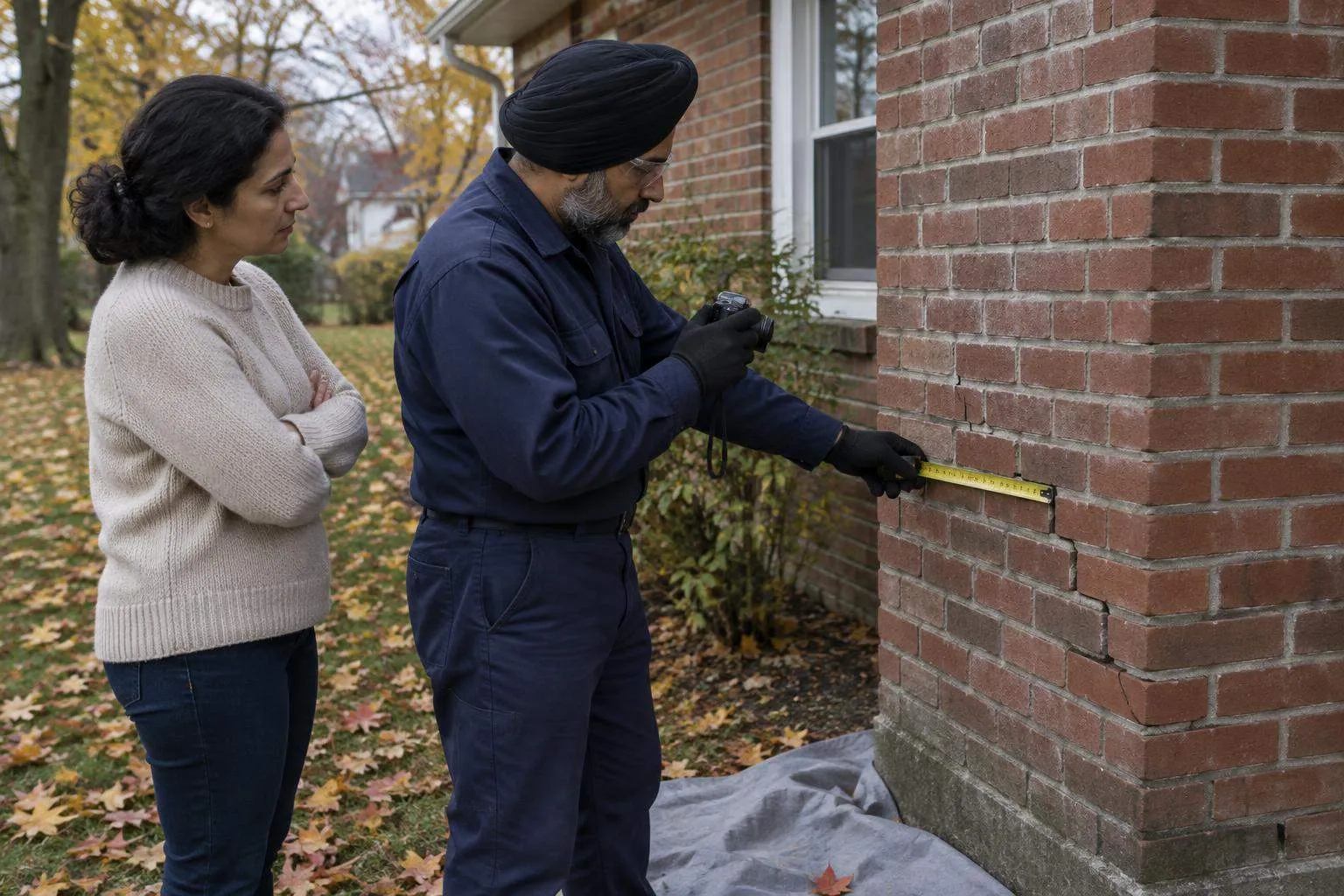
The inspector starts outside, visually examining:
- Masonry condition: Cracks, loose bricks, deteriorated mortar joints
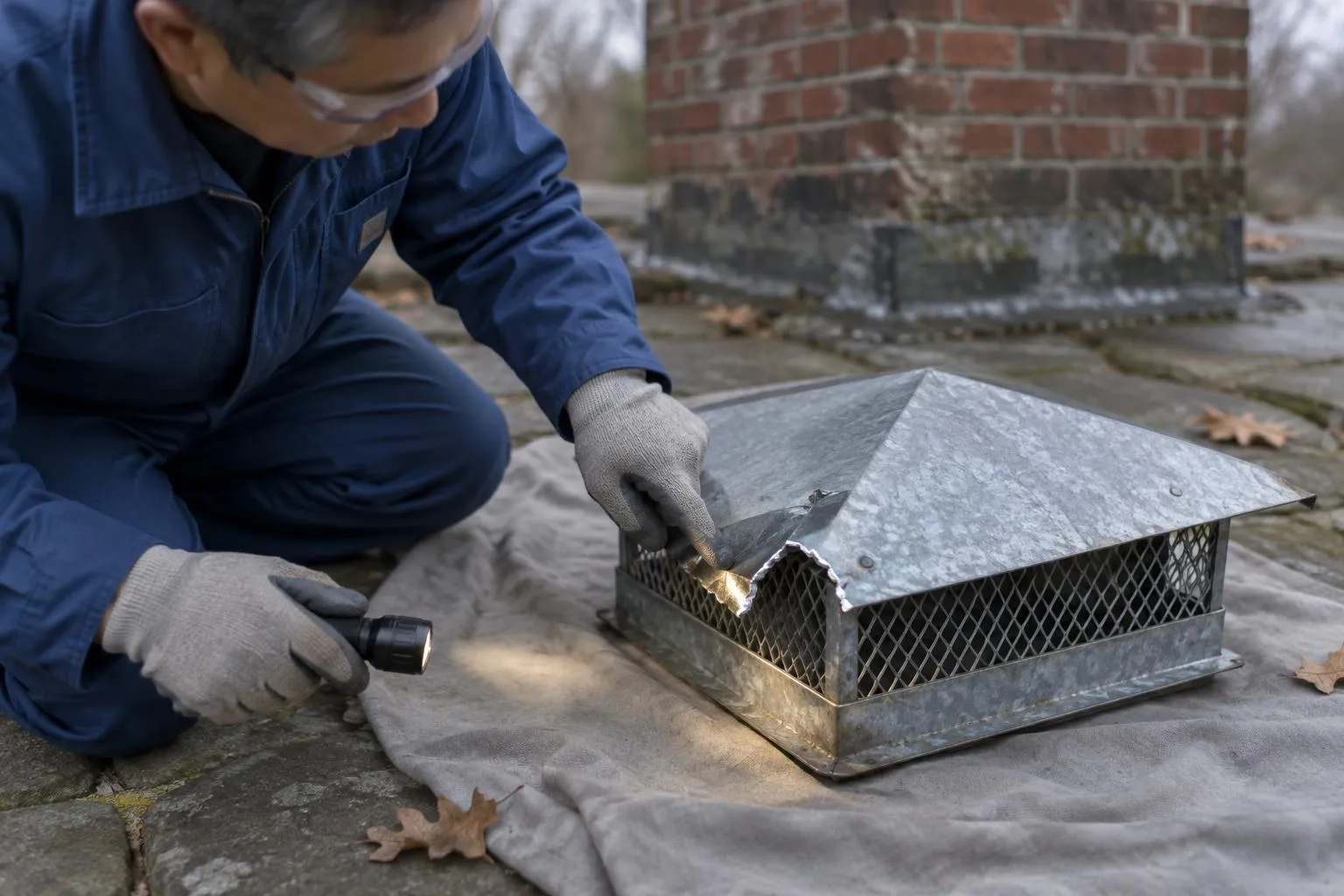
- Chimney cap: Is it intact, properly fitted, and functioning?
- Chimney crown: Any gaps, damage, or missing sealant?
- Flashing: Water intrusion points around where the chimney meets the roof
They’re looking for structural red flags that could lead to water damage, airflow problems, or safety hazards.
Phase 2: Interior Examination (10–20 minutes)
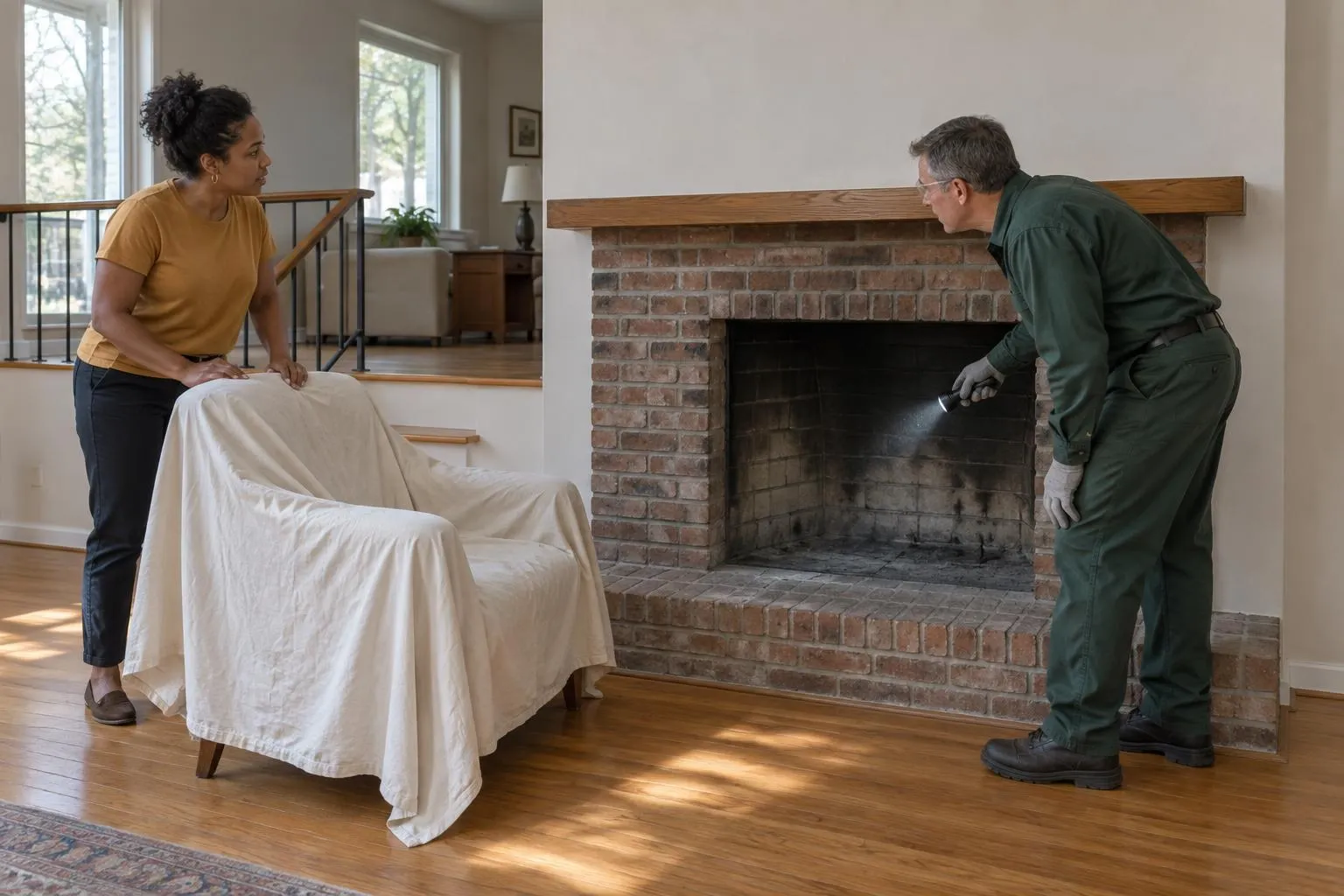
Inside your home, they check:
- Fireplace firebox: Structural integrity, cracks, damage
- Damper: Does it open and close smoothly? Any rust or deterioration?
- Smoke chamber: Proper shape and integrity
- Hearth and surrounding materials: Signs of wear or damage
This is where they spot obvious problems like a stuck damper or loose mortar inside the firebox.
Phase 3: Flue Inspection (15–30 minutes, varies by level)
Level 1: Flashlight and mirror inspection to spot creosote buildup, blockages (animal nests, debris), and obvious damage.
Level 2: Video camera pushed up into the flue to inspect interior surfaces in detail. They’re looking for:
- Creosote buildup thickness and type (you can’t accurately judge this without seeing it)
- Cracks or gaps in the flue lining
- Missing or deteriorated sections of lining
- Obstructions
- Any structural failure indicators
The video feed shows them everything—and you can usually see it too. This is the difference between “looks okay” and actual data.
| Inspection Level | Duration | What’s Included | Best For |
|---|---|---|---|
| Level 1 | 30–60 min | Visual exterior, interior, basic flue check | Annual maintenance |
| Level 2 | 1–3 hours | Level 1 + video camera + detailed component assessment | Home sale, new appliance, chimney fire |
| Level 3 | Up to 5 hours | Structural assessment, possible invasive inspection | Major damage, seismic/weather damage |
Step 5: Review Findings and Get a Written Report
This is critical and often overlooked.
At the end of the inspection, the professional should provide:
- Written inspection report (not just verbal feedback)
- Photos or video stills (especially for Level 2)
- Specific findings: What’s working, what needs attention, what needs repair
- Recommendations: Clean-only, clean + repair, repair before use, etc.
- Cost estimates for recommended work (if they also do repairs)
Reality Check: If they hand you a verbal report and leave, that’s incomplete service. Insist on written documentation. You need it for your records, for resale, and to validate decisions about whether to get a second opinion.
Pro Tip:If they recommend major repairs (lining replacement, crown rebuild, etc.), get a second estimate before committing. Inspection and repair work can carry financial conflicts of interest.
Step 6: Timeline Expectations and Turnaround
For scheduling:
- Most inspectors book 24–72 hours out
- Peak seasons (fall/winter) fill up faster
- Weekday appointments are usually easier to secure
For results:
- Level 1 report: Same day or within 24 hours
- Level 2 report: Within 1–3 business days (if they need to review video footage)
- Level 3 report: May take a week, depending on complexity
If repair work is needed:
- Simple cleaning: Same day or next day
- Repairs (relining, crown work, etc.): Depends on severity. Simple fixes might be same visit; major work requires scheduling.
Practical Bottom Line
Here’s how to execute this without wasting time:
- Identify which level you need. Annual maintenance = Level 1. Selling, buying, or had an incident = Level 2.
- Call a CSIA-certified inspector in your area. Confirm credentials before scheduling.
- Provide clear access details and mention any known issues when you book.
- Be home during the inspection. Ask questions, watch the video (for Level 2), and request clarification on findings.
- Get everything in writing. If they don’t provide a written report with photos or video, ask for one.
- Get a second opinion if repair costs are high. Inspectors often also do repairs—there’s a potential conflict of interest.
The whole process from call-to-report takes 1–5 business days depending on the inspection level and how quickly you can schedule. If you’re selling a home, start this 2–3 weeks before your deadline to account for scheduling and any unexpected repair lead times.
For more on what makes a good chimney inspector and what certifications actually matter, check out our complete guide to chimney inspectors.
Done reading? Get quotes from chimney inspectors near you.
Takes about a minute. Free, no obligation; providers reply to you directly.
Popular cities: