Get free quotes from chimney inspection near you
Takes about a minute. Free, no obligation; providers reply to you directly.
You’re sitting in your living room on a cold November morning when you smell something acrid drifting down from the fireplace—not quite smoke, not quite chemical. Your spouse mentions the wood-burning stove hasn’t been drawing right all season. You Google “chimney inspector” at 9 a.m., and by 2 p.m. you’re staring at three different quotes ranging from $150 to $600, wondering what the hell the difference is and whether you’re about to get ripped off.
I get it. Chimney work feels opaque. The terminology is baroque. Half the time you don’t know if you’re looking at routine maintenance or an emergency situation. So I spent a lot of time digging into what a chimney inspector actually does—from the moment you call to the moment they hand you a report—so you can stop guessing and start making informed decisions.
The Short Version:A chimney inspector performs a visual safety audit of your fireplace, flue, and venting system, checking for creosote buildup, structural damage, and fire/CO hazards. A basic Level 1 inspection (annual maintenance) takes 30–60 minutes and costs $100–$250. Anything beyond that—Level 2 with camera work, Level 3 with partial disassembly—happens only when specific problems are suspected or required (after a fire, before selling your home, when changing fuel types).
Key Takeaways
- Three inspection levels exist by design. You’re paying for different levels of forensic rigor, not guessing.
- Creosote buildup causes 22,300 chimney fires annually in the US. Early detection via annual inspections is genuinely how you prevent catastrophe.
- The inspector’s job is narrow and specific. They’re looking at readily accessible areas for code violations and hazards—not doing a full renovation assessment.
- Pricing scales with complexity. Level 1 is $100–$250; Level 2 (with video camera) runs $250–$500; Level 3 (with disassembly) starts at $500+ depending on what needs rebuilding.
Here’s What Most People Miss
The chimney inspection industry operates on three defined tiers—Level 1, Level 2, Level 3—established by the Chimney Safety Institute of America (CSIA) and backed by the NFPA 211 fire code. This isn’t marketing speak. It’s literally the standard.
What this means: when an inspector quotes you a price, they’re almost always telling you which level they’re performing, even if they don’t use that language. Most homeowners never get past Level 1. Some never need to. The fact that three levels exist doesn’t mean you’re being upsold—it means the industry built a system to avoid overkilling routine work.
The reality most contractors won’t explain clearly: you’re only getting what you’re paying for, literally.
The Three Levels Explained
| Level | What Happens | How Long | Tools Used | When You Need It | Cost |
|---|---|---|---|---|---|
| Level 1 | Visual check of fireplace, exterior, accessible flue interior. Flashlight inspection for creosote, obstructions, structural issues. | 30–60 min | Flashlight, mirror, basic tools | Annual routine maintenance; no known issues | $100–$250 |
| Level 2 | Level 1 + camera scope inside the entire flue. Inspector enters attic/crawlspace to check roof penetration, flashing, cap condition. Video recorded. | 1–2 hours | Video camera (Chim-Scan), ladder, mirrors, specialized scope | After a fire, earthquake, real estate transaction, changing fuel type, or if Level 1 finds concerns | $250–$500 |
| Level 3 | Levels 1–2 + partial or full disassembly of chimney to access hidden areas (crown, interior walls, chase). Can include removal of dampers, metal liners. | 2–4+ hours | Disassembly tools, specialized rigging, professional-grade camera | Suspected serious hazards, extensive damage, or obstruction you can’t see otherwise | $500+; varies wildly based on rebuild needs |
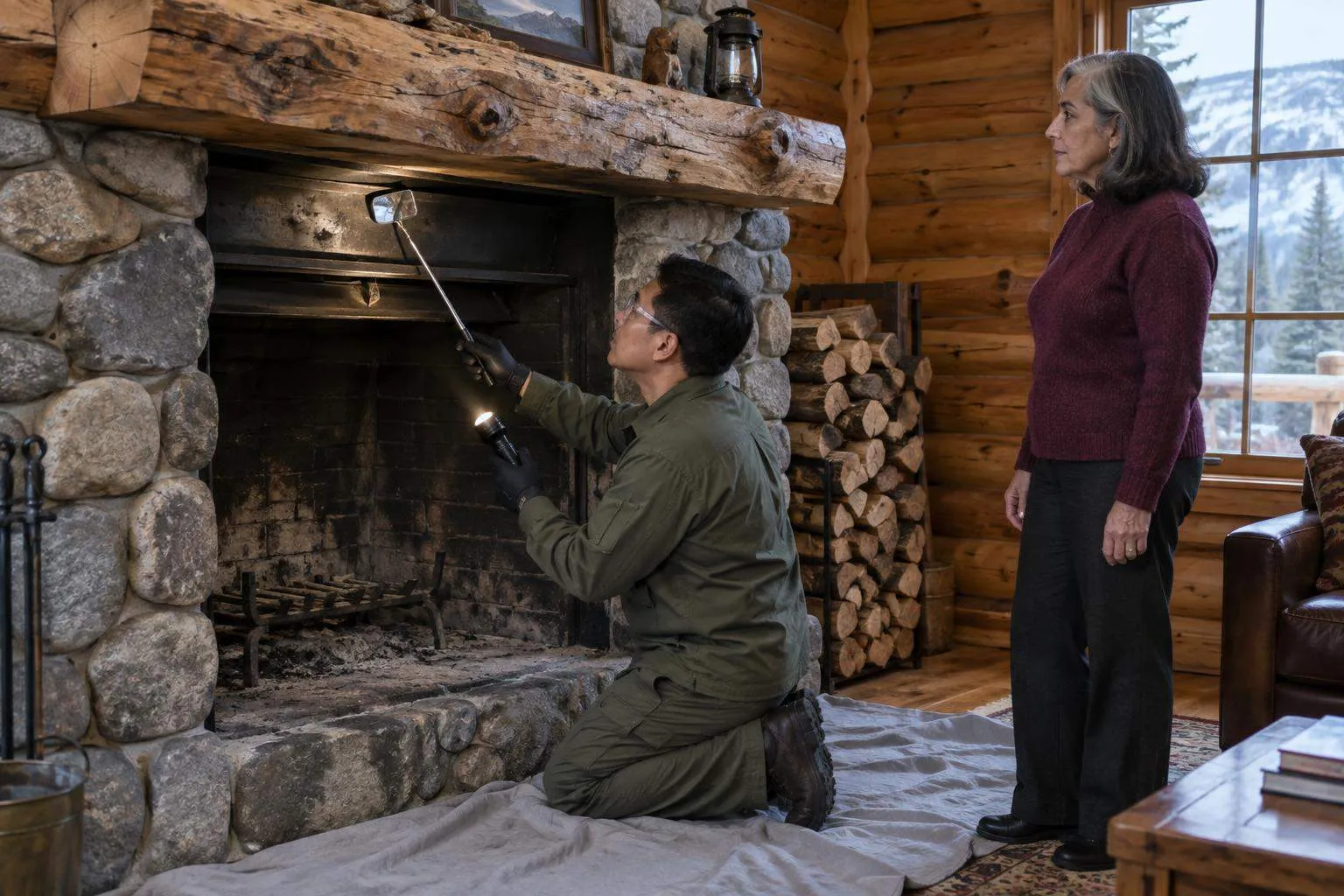
Nobody tells you this: Level 1 is meant to be quick and visual. The inspector isn’t taking your chimney apart. They’re using a flashlight and maybe poking around with a mirror to see if obvious problems exist—creosote buildup, bird nests, loose bricks, damper function. That’s it. This is what “annual inspection” means in most contexts.
Level 2 is where the camera comes in, and honestly, this is where most problems get caught because the inspector can see the entire interior of your flue, not just what’s reachable from the bottom.
Level 3 is rare and expensive because it involves actual deconstruction.
What Actually Happens During an Inspection (Start to Finish)
Before they show up: Clear the fireplace area of furniture, rugs, anything that could get dusty. You don’t need to do anything else.
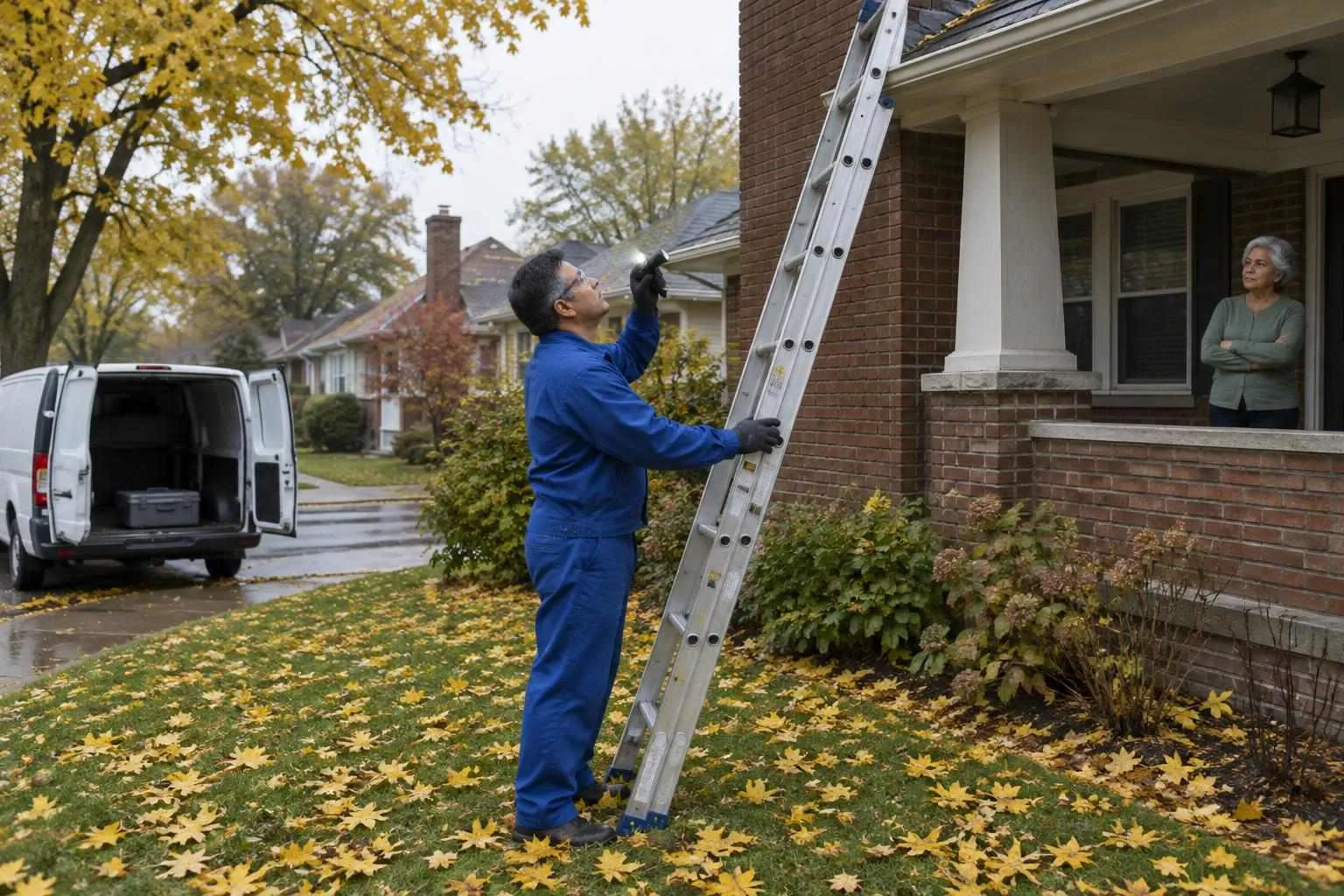
On-site: The inspector will start outside—looking at the chimney crown (the concrete top), the flashing (where the chimney meets the roof), the cap (metal grate on top), and the exterior brickwork. They’re checking for cracks, missing mortar, spalling (brick deterioration), and water damage signs.
Then they go inside. For a Level 1, they’ll look down the fireplace opening with a flashlight, checking the damper, the smoke chamber, and the visible flue interior. They’re looking for creosote (a dark, tarry, flammable deposit that builds up from burning wood), obstructions, loose bricks, and the condition of the flue liner (the interior tube, usually clay).
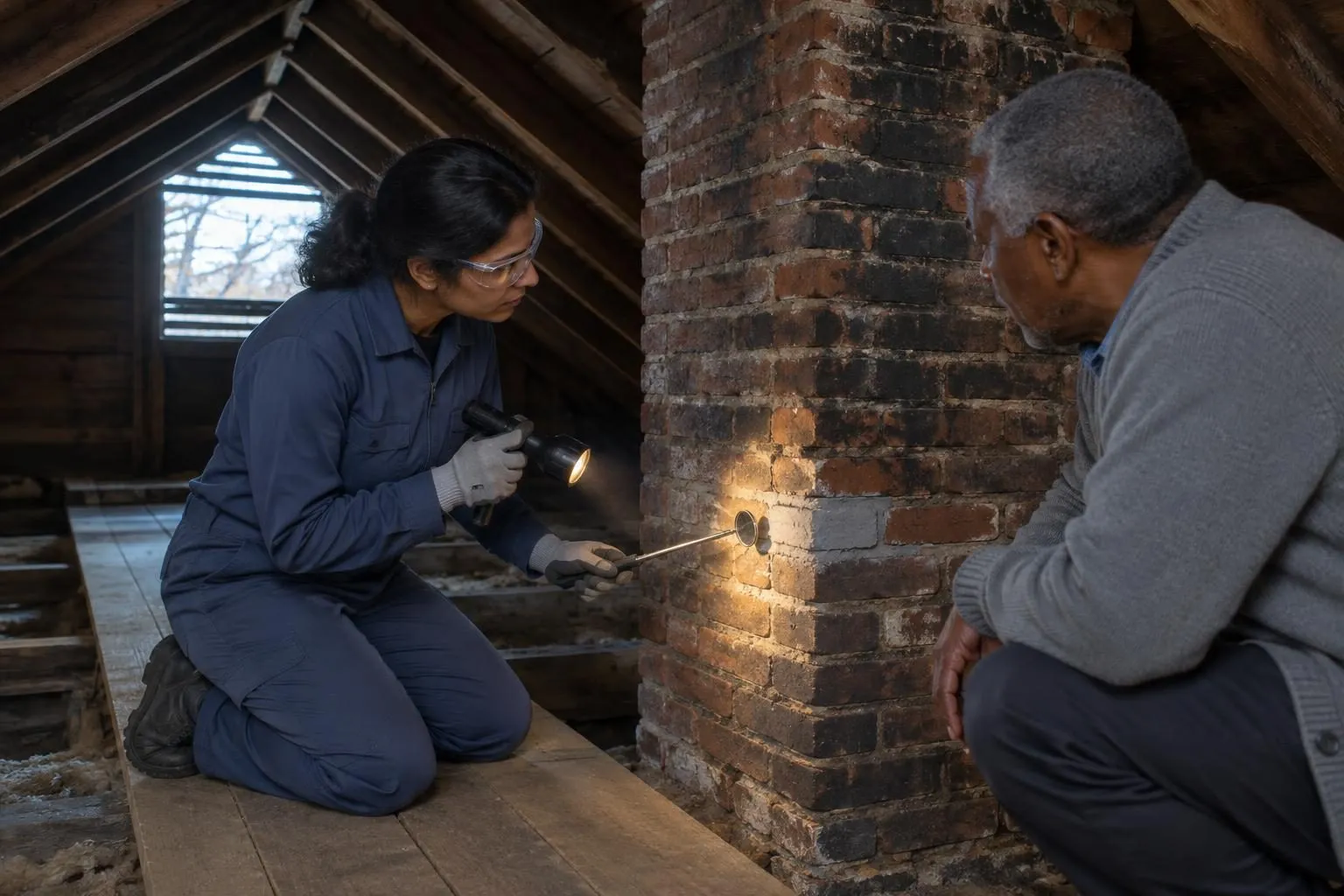
For a Level 2, they’ll run a camera through the entire flue—from the firebox all the way to the top—so they can see cracks, gaps, or damage you’d otherwise never know existed. They’ll also check the attic or crawlspace to see how the chimney penetrates the roof and whether the flashing is sealed properly.
Duration: Level 1 typically takes 30–60 minutes. Level 2 stretches to 1–2 hours because of the camera work and additional roof/attic checks.
The report: You get a written document (often with photos or video) that lists findings, identifies code violations, and recommends next steps. This is your receipt that the work was done and your proof for insurance or resale purposes.
Reality Check:The inspector’s scope is limited to readily accessible and visible areas. They’re not performing an exhaustive forensic analysis. If something is hidden behind a wall or buried under layers of damage, they’ll flag it as “unable to determine” rather than guess.
The Villains: What Inspectors Are Actually Looking For
Creosote buildup. This is the main culprit behind chimney fires. It’s a black, tarry, flammable residue that accumulates when wood burns inefficiently or incompletely. Level 1 inspections catch this visually. If it’s thick, the inspector will recommend cleaning. This is not optional—creosote fires burn hotter than house fires and can spread to your framing.
Structural damage. Loose or missing bricks, crumbling mortar, spalling (brick face peeling away), foundation settlement cracks. These let water in and compromise the chimney’s integrity. Minor issues get sealant. Serious ones require tuck-pointing (mortar regrouting) or full rebuild.
Flue liner problems. Your chimney liner is the tube inside that contains the hot gases. If it’s cracked or missing sections, hot smoke can contact wood framing—and that’s a fire waiting to happen. Some liners are clay (old, fragile), some are steel (better). If the liner is damaged, relining is required.
Chimney leaks. Water in the firebox, musty smells, efflorescence (white powdery residue on bricks). Usually caused by a damaged cap, bad flashing, or spalling bricks. Solution depends on severity—a new cap is $200–$400; roof flashing repair might be $500+.
Blockages and obstructions. Birds’ nests, debris, abandoned dampers. The camera catches these instantly. Removal is straightforward.
Pro Tip:Annual inspections catch these problems before they become emergencies. A small liner crack found during routine inspection costs way less to fix than the damage from a chimney fire or roof leak that went undetected for two years.
The Money Part
Full-service pricing (inspection + cleaning + minor repairs): $200–$1,000+. Regional variation is real—urban areas and areas with older housing stock trend higher. The price scales with what the inspector finds.
Why Level 2 costs almost double Level 1: The camera, the time, the attic/roof checks. You’re getting visibility into the entire flue, not just what’s reachable from below. In most cases, this is worth the $150–$300 premium because problems get caught early.
Practical Bottom Line
-
Get a Level 1 inspection annually if you use your fireplace or wood stove. This is maintenance, not optional. It should cost $100–$250 and take about an hour. Booking one now, before winter, is smart.
-
Get a Level 2 if you’re selling your home, buying a new house with a fireplace, or switching fuel types. Real estate transactions often require it anyway.
-
Only consider Level 3 if the Level 2 identifies something that can’t be diagnosed otherwise. This is rare.
-
Ask for CSIA-certified inspectors. It’s not a legal requirement everywhere, but it’s the industry standard and a sign of professional rigor. Same with companies that reference NFPA 211 and IRC codes.
-
Get the report in writing with photos. You need this for insurance and resale documentation anyway.
The chimney inspection industry works because early detection genuinely prevents fires, CO poisoning, and expensive water damage. You’re not being paranoid by getting one annually—you’re following the same standard that fire codes exist around.
Read next: For the full breakdown on choosing a chimney inspector and understanding repairs, check out The Complete Guide to Chimney Inspectors.
Done reading? Get quotes from chimney inspectors near you.
Takes about a minute. Free, no obligation; providers reply to you directly.
Popular cities: