Get free quotes from chimney inspection near you
Takes about a minute. Free, no obligation; providers reply to you directly.
I got called back to my house mid-inspection because I’d left a throw pillow on the fireplace mantel.
Not a big deal, you’d think — except the inspector had to stop what he was doing, take off his gloves, move it himself, and start over. Fifteen minutes lost. And when I asked him later what else I should have done, he gave me a look that said “everything,” then handed me a one-page checklist I wish I’d seen before he arrived.
That’s the gap this article fills. Most homeowners treat chimney inspections like a surprise dental visit — they show up, cross their fingers, and hope nothing breaks. But chimney inspectors are like mechanics; they work faster and find more when you actually prep the space. The difference between a 45-minute session and a 90-minute one often comes down to whether you cleared the fireplace or left it looking like a decorator’s showroom.
Here’s the exact checklist that keeps inspections on schedule and catches real problems.
The Short Version:Clear the fireplace completely 24–48 hours before your appointment, stop burning wood immediately, cover nearby furniture, secure pets, and list any issues you’ve noticed (smells, leaks, poor draft). You’re done.
Key Takeaways
- Stop using your fireplace 24–48 hours before the inspection — hot chimneys and lingering embers shut down access
- Clear the fireplace area completely — mantel, decorations, furniture, ash, everything — so the inspector can actually work
- Cover nearby surfaces with sheets or tarps — creosote and soot will migrate, and this stops it from coating your furniture
- Report known issues upfront — leaks, odors, moisture, poor draft — so the inspector knows what to look for
Why Prep Actually Matters (More Than You Think)
Here’s the uncomfortable truth: 95% of chimney issues are preventable with annual inspections, but only if the inspector can actually see what’s happening inside.
Creosote buildup — that hard, black, tar-like substance that accumulates in the flue — causes roughly 36 chimney fires annually in the US. Most homeowners don’t know they have it until it’s a problem. An inspector catches it immediately. But only if the firebox isn’t packed with last season’s holiday decorations.
The other thing nobody mentions: inspectors work by appointment, usually with back-to-backs scheduled. If you waste 20 minutes clearing clutter that should have been gone, you’re either getting a rushed inspection or pushing real homeowners into next week.
I’m not saying you’re intentionally sabotaging the process. I’m saying the setup matters as much as the actual inspection.
The Complete Pre-Inspection Checklist
1. Stop Using the Fireplace Immediately (24–48 Hours Before)
This is non-negotiable.
Cool chimneys aren’t optional — they’re essential. Inspectors need to work safely, and hot flues or smoldering embers create a fire hazard during the inspection itself. More importantly, ashes and soot stick to inspection equipment, and lingering heat can damage camera equipment if the inspector is doing a Level 2 video scan.
Liberty Mutual and every other insurance carrier backs the 24-hour minimum. Most professionals recommend 48 hours if you’ve burned heavily.
Pro Tip:If you’re scheduling an inspection in winter, book it for late morning or early afternoon. This gives you the full previous evening and night to let the chimney cool completely without sitting idle for days.
2. Clear the Fireplace Area (Everything)
This means:
- Remove the fireplace grate
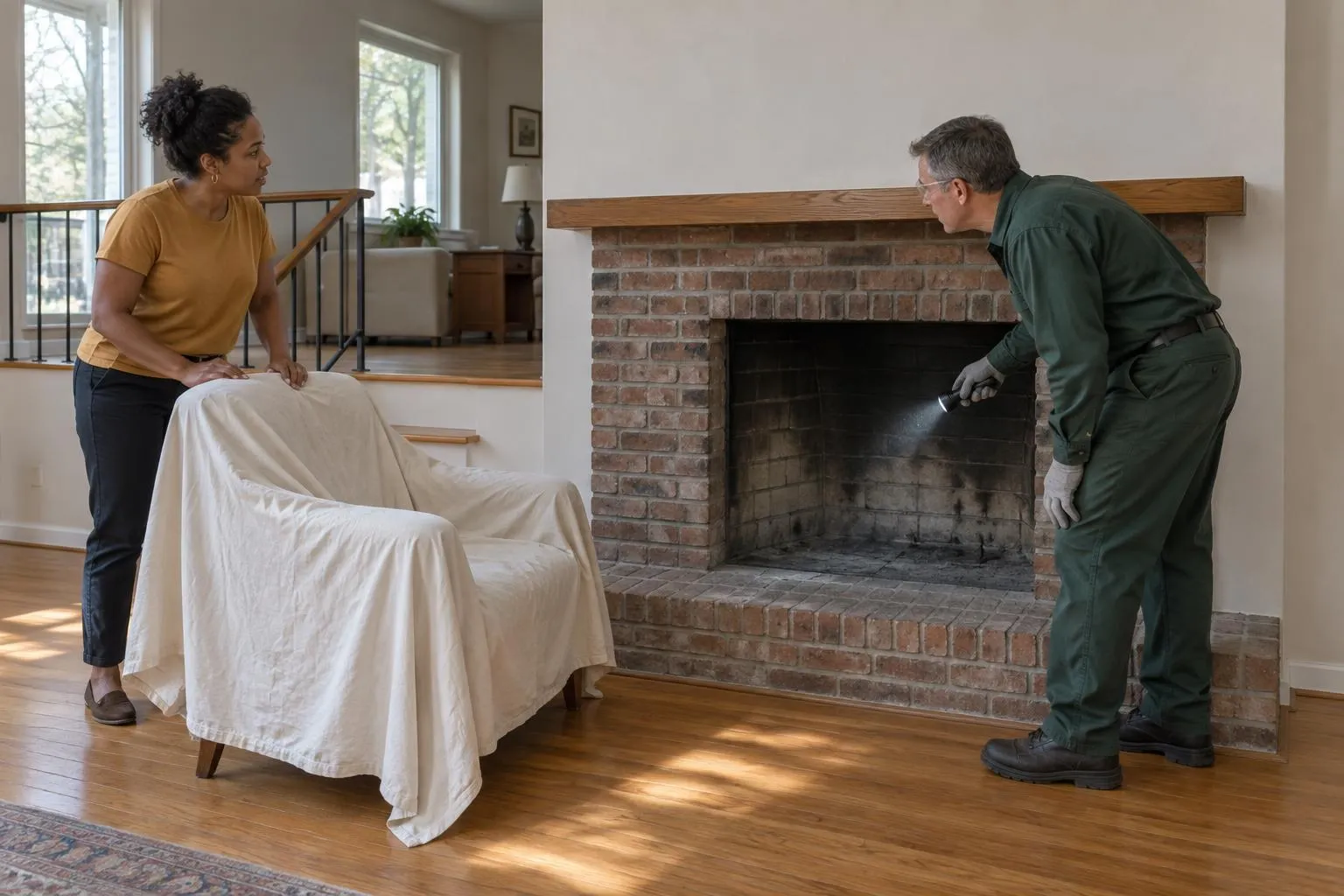
- Clean out all ash, unburned logs, and burned wood from the firebox
- Clear the mantel completely (photos, candles, grandmother’s china, all of it)
- Move furniture back at least 3 feet from the fireplace opening
- Take down holiday decorations, stockings, or seasonal items
- Remove any hearth rugs or protective mats
Real example from Black Goose Chimney: one homeowner had stacked firewood against the firebox. The inspector couldn’t open the damper to check the smoke chamber. Lost 30 minutes.
Why this matters: Inspectors need clear access to the damper, smoke chamber, and flue. If they’re navigating around obstacles, they’re either moving stuff themselves (which slows everything down) or they’re missing details because they can’t get a clean line of sight.
| Clear This | Why |
|---|---|
| Fireplace grate | Blocks internal access; inspector needs to see the firebox floor |
| Ash and debris | Obscures floor damage, cracks, and buildup; makes video scan harder |
| Mantel items | Risk of breakage; clutter slows access |
| Furniture near opening | Increases soot spread; restricts movement |
| Decorations/stockings | Same as mantel — breakage risk and clutter |
3. Protect Your Surrounding Furniture and Flooring
Creosote and soot are going to fall during the inspection. They just are.
Cover nearby furniture, your hearth, and flooring with sheets or tarps — plastic is fine, white sheets are better (you can see the soot and know it’s contained). The inspector will likely bring their own floor covering too, but yours adds an extra layer and shows you understand what’s about to happen.
Reality Check:Inspectors don’t want to dirty your home. They bring equipment that minimizes mess. But if your furniture is sitting two feet from the fireplace, soot will find it. Plan for this.
4. Secure Pets in Another Room
Pets don’t mix with inspections for two reasons:
- They’re distracting. An enthusiastic dog running laps around the fireplace makes detailed work harder.
- They’re at risk. Soot and dust aren’t good for pets’ respiratory systems, and the noise of equipment can stress anxious animals.
Close them in a bedroom or another area of the house. This takes 30 seconds and removes a variable that could extend your session by 15 minutes.
5. Document Known Issues and Have Them Ready
Before the inspector arrives, walk through and note anything unusual:
- Odors — musty, smoky, or gas-like smells when the fireplace isn’t in use
- Moisture or water stains — around the chimney, inside the firebox, or on ceilings/walls near the flue
- Poor draft — smoke backing up into the room instead of going up the flue
- Creosote visible on grate — black, tarry buildup (sign of incomplete combustion)
- Previous repairs or modifications — new cap, relining, damper replacement
- How often you use the fireplace — weekly burning vs. occasional
Write these down or be ready to mention them when the inspector arrives. Chimney Doctors NY emphasizes this: giving context speeds up diagnosis because the inspector knows what to prioritize.
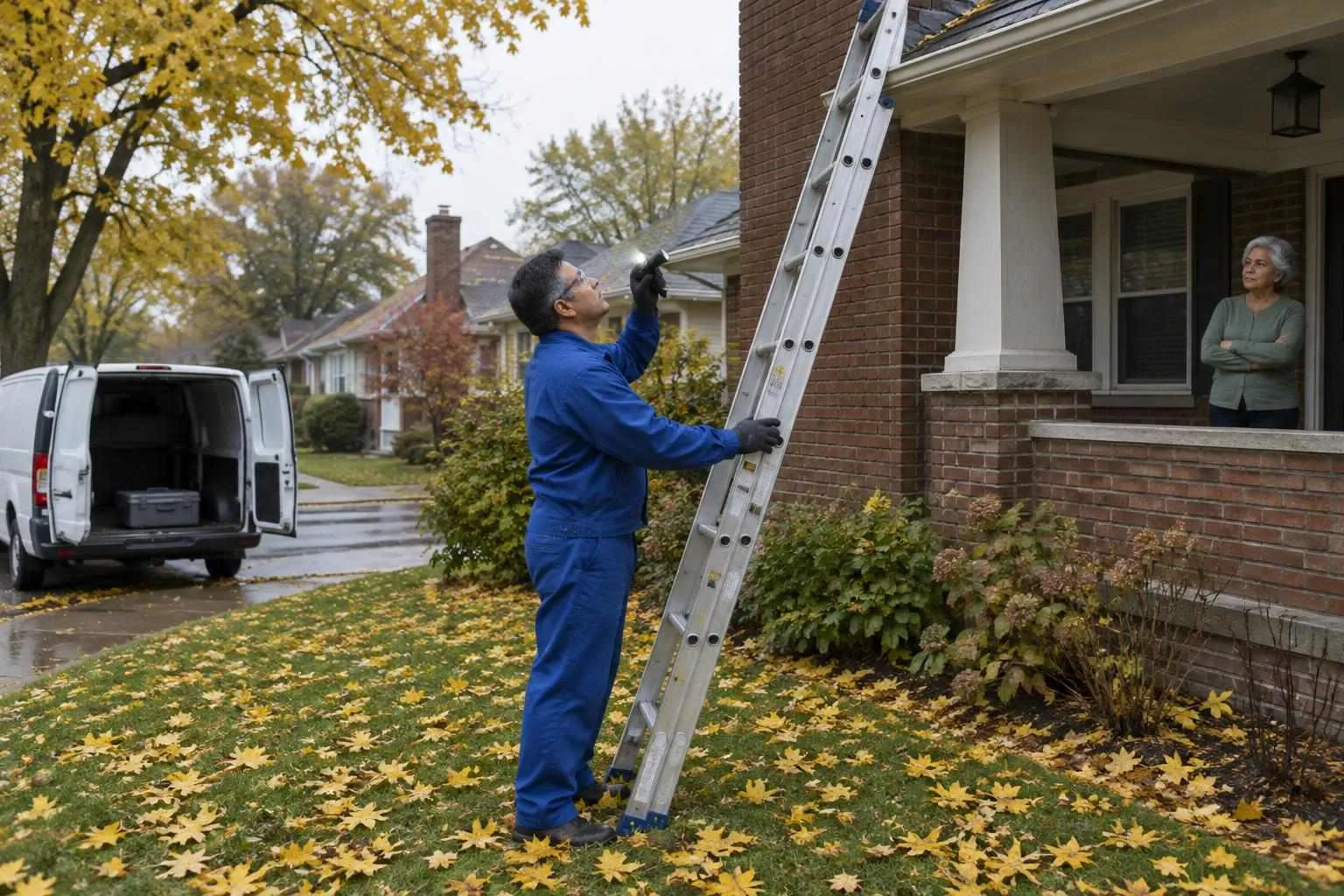
6. Pre-Check the Exterior
Walk around the outside of your home and note anything visible:
- Cracks or loose bricks in the chimney stack
- Deteriorating mortar joints
- Damaged or missing chimney cap
- Debris (leaves, branches) near the top
- Visible separation between chimney and roof
- Rust stains on the exterior
You don’t need to climb on the roof or get dangerous — just document what you can see from the ground. This helps the inspector know what to look for closely and shows you’re engaged.
What Happens During the Inspection (And Why Your Prep Matters)
Chimney inspections come in two levels:
| Level 1 | Level 2 |
|---|---|
| Visual check of accessible areas (exterior, firebox, damper, flue for creosote/obstructions) | Includes video camera scan of interior flue |
| Annual maintenance standard | Required for home sales, post-fire, storm damage, performance issues |
| 30–45 minutes typical | 45–90 minutes typical |
| $150–$250 typical cost | $200–$500 typical cost |
Level 2 inspections add $150–$400 to closing costs in real estate transactions.
A clear, prepped fireplace cuts 15–20 minutes off a Level 2 and ensures the inspector actually gets useful video of the entire flue, not footage obscured by soot clouds from debris disturbance.
Common Mistakes (And How to Avoid Them)
Mistake #1: Scheduling in peak season (December–February) without a buffer.
Everyone books inspections before winter. Schedule yours in October or March if possible. Off-season scheduling means more appointment availability and less rushed inspections.
Mistake #2: Forgetting that “cleared” doesn’t mean empty.
Some homeowners think “cleared” means swept. It doesn’t. It means removed entirely. The ash that’s been sitting in your firebox for six months needs to be shoveled out, not just stirred around.
Mistake #3: Not cooling down the chimney properly.
You burned a fire yesterday evening. Today at 10 a.m., it feels cool. It’s probably not. Wait the full 24 hours minimum.
Mistake #4: Leaving the appointment open-ended.
If the inspector is scheduled at 2 p.m., don’t book other appointments at 3 p.m. A Level 2 can run long if the flue is dirty or there’s a structural issue to document. Give yourself a 2–3 hour window.
Practical Bottom Line
Do this, in order, at least 48 hours before your appointment:
- Stop burning immediately. No exceptions.
- Empty the firebox completely. Grate out, ash out, logs out.
- Clear the mantel and surrounding area. Three-foot radius.
- Cover furniture and flooring with sheets or tarps.
- Close pets in another room.
- Write down any issues you’ve noticed (odors, moisture, poor draft).
- Walk the exterior and note visible cracks, deterioration, or damage.
- Confirm the appointment 24 hours before — give the inspector your cell if they need to reschedule.
That’s it. You’ve now done 80% of what separates a thorough inspection from a surface-level one.
Ready to learn what happens after the inspection? Check out our complete guide to chimney inspectors for what to expect, how to read the report, and when repairs are actually urgent vs. maintenance. Also worth reading: our guide on how often you should have your chimney inspected — because prep only matters if you’re getting regular checks.
Done reading? Get quotes from chimney inspectors near you.
Takes about a minute. Free, no obligation; providers reply to you directly.
Popular cities: