Get free quotes from chimney inspection near you
Takes about a minute. Free, no obligation; providers reply to you directly.
Last spring, my neighbor got a “clean bill of health” from a chimney sweep. Everything looked good, he said. No creosote, no blockages. Three months later, my neighbor’s insurance company flagged a structural crack in his flue during a refinancing inspection—the same flue that had just been swept. Turns out, the sweep never looked for it.
That’s the moment I realized most homeowners don’t understand what they’re actually paying for.
The Short Version:A sweep cleans; an inspector finds problems. You need both annually—they’re not the same service, and doing one won’t protect you from fires or carbon monoxide leaks that the other would catch.
Key Takeaways
- Chimney sweeps remove creosote and debris; inspectors identify structural damage, cracks, and safety hazards. They’re complementary, not interchangeable.
- 36% of chimney fires happen because of neglected maintenance; proper annual sweeping and inspection reduce that risk significantly.
- NFPA 211 standards require annual inspections for all solid fuel-burning appliances—but many homeowners skip this step.
- Bundling services saves 20–30% compared to booking them separately, and costs $250–$500 for most wood-burning homes.
The Confusion Starts Here
Here’s what most people miss: the chimney industry has two different jobs that sound like they should be the same thing.
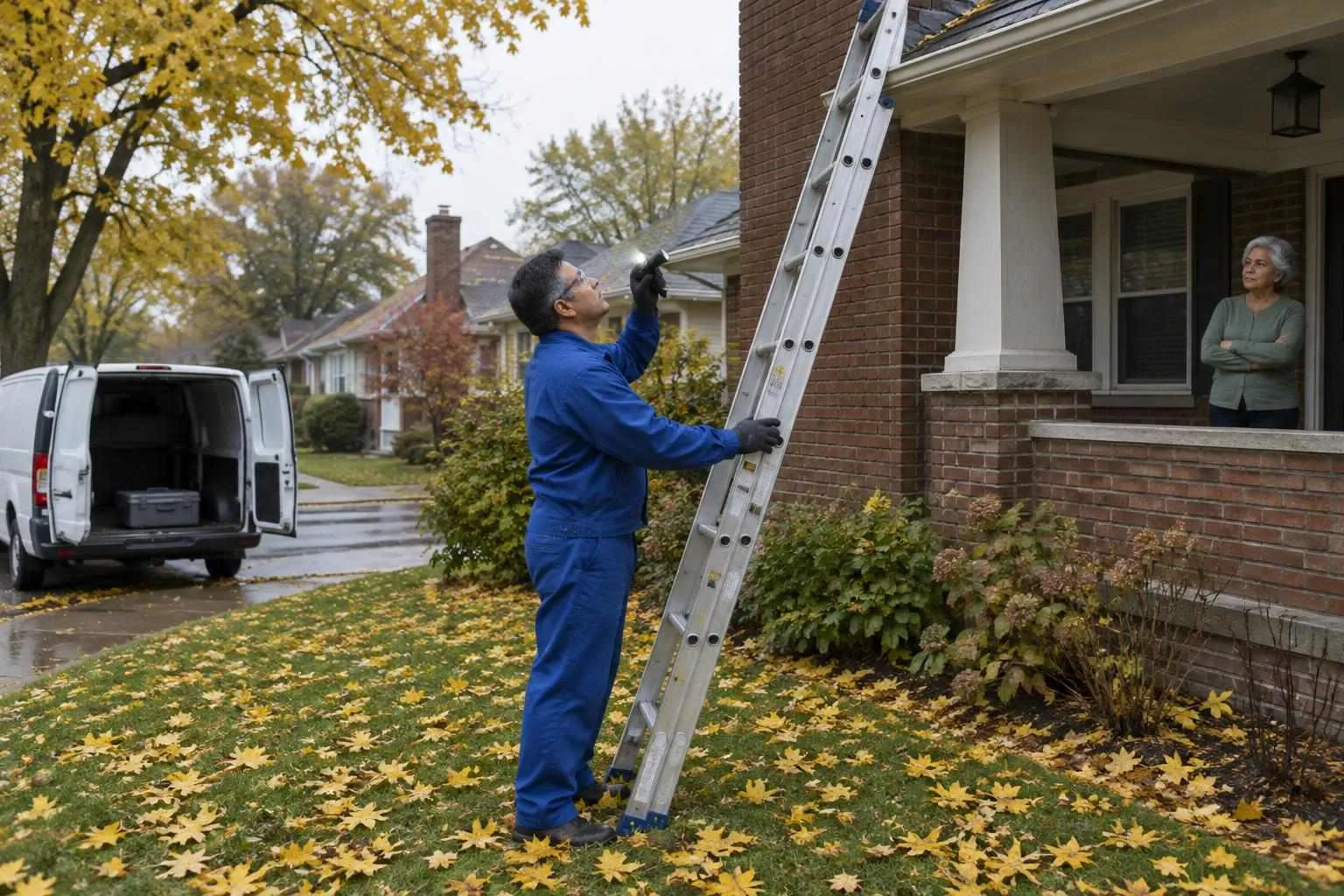
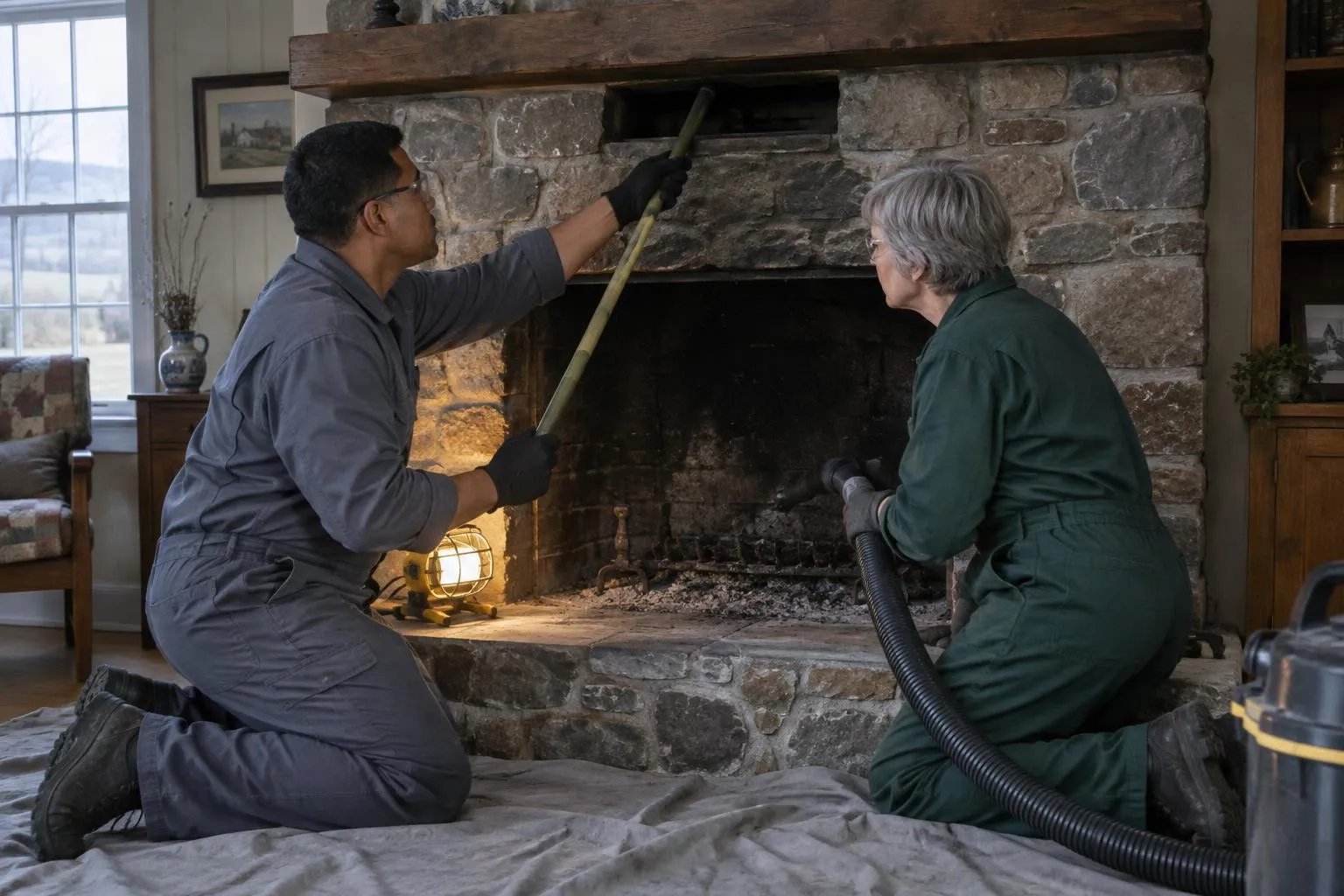
A chimney sweep removes flammable buildup—creosote, soot, animal nests, debris—using brushes, rods, and vacuums. That’s the actual cleaning.
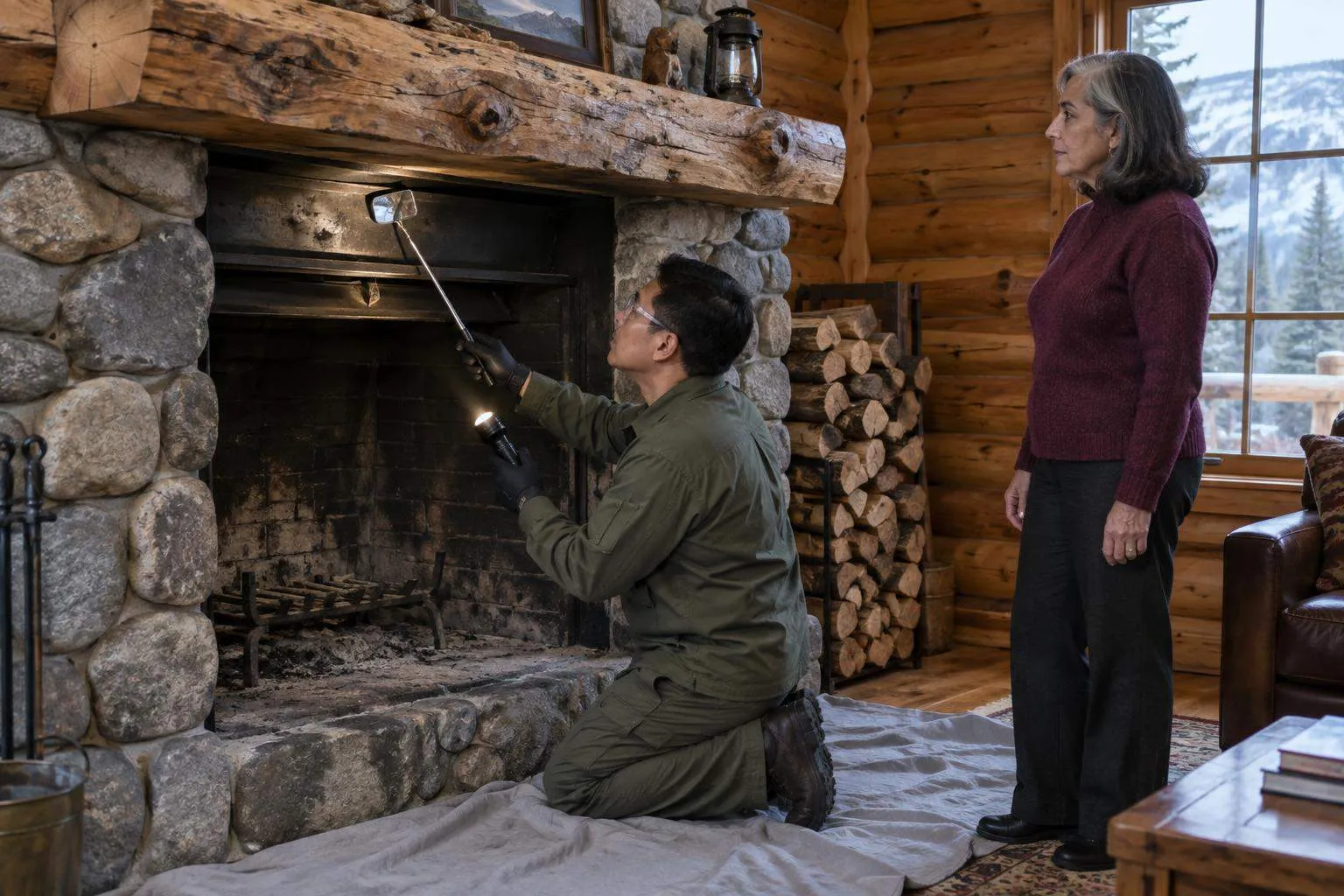
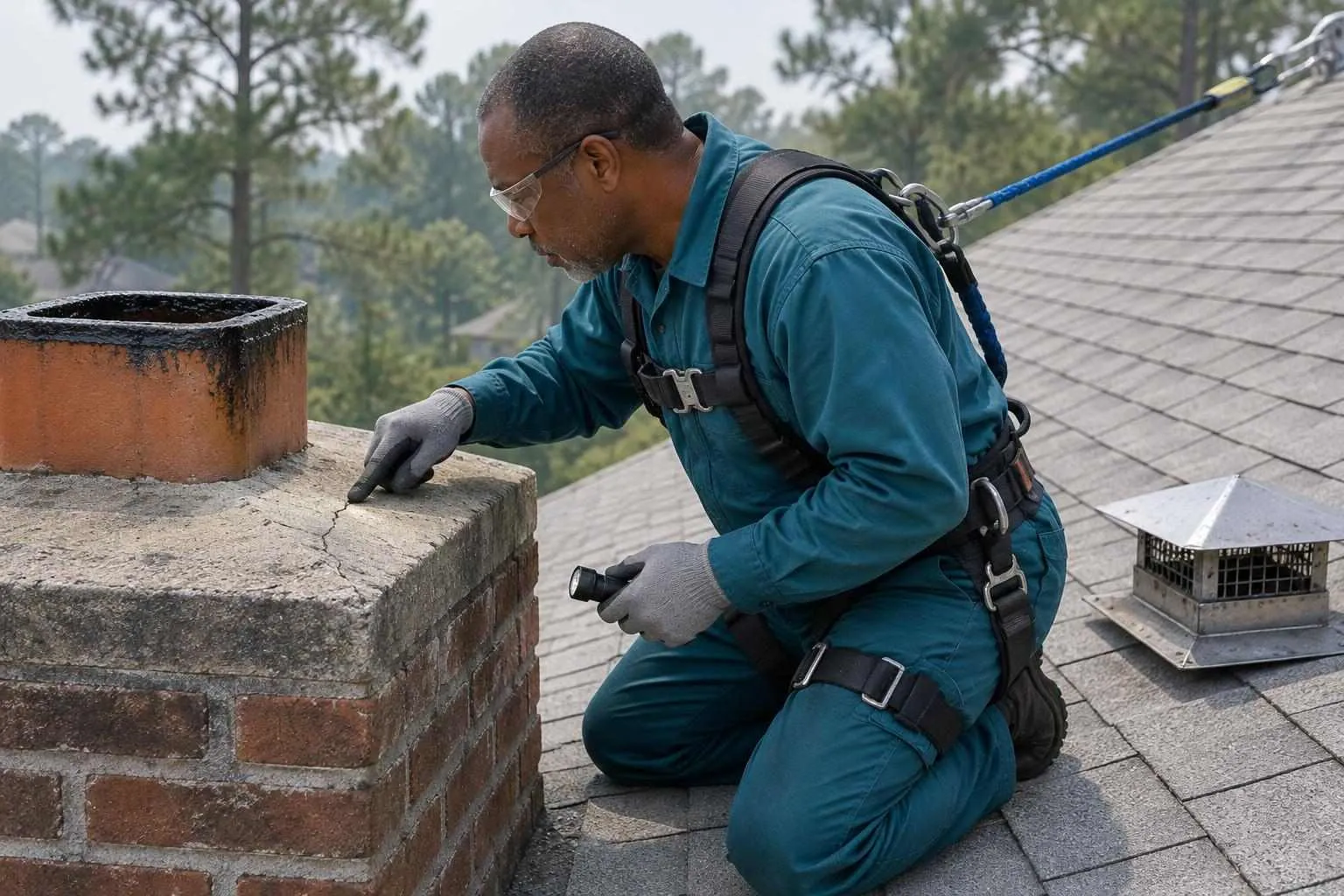
A chimney inspector uses cameras, lights, and hands-on assessment to evaluate the structural integrity of your flue, masonry, liner, damper, and firebox. They’re looking for cracks, spalling bricks, separation, and blockages that a sweep’s brush might miss entirely.
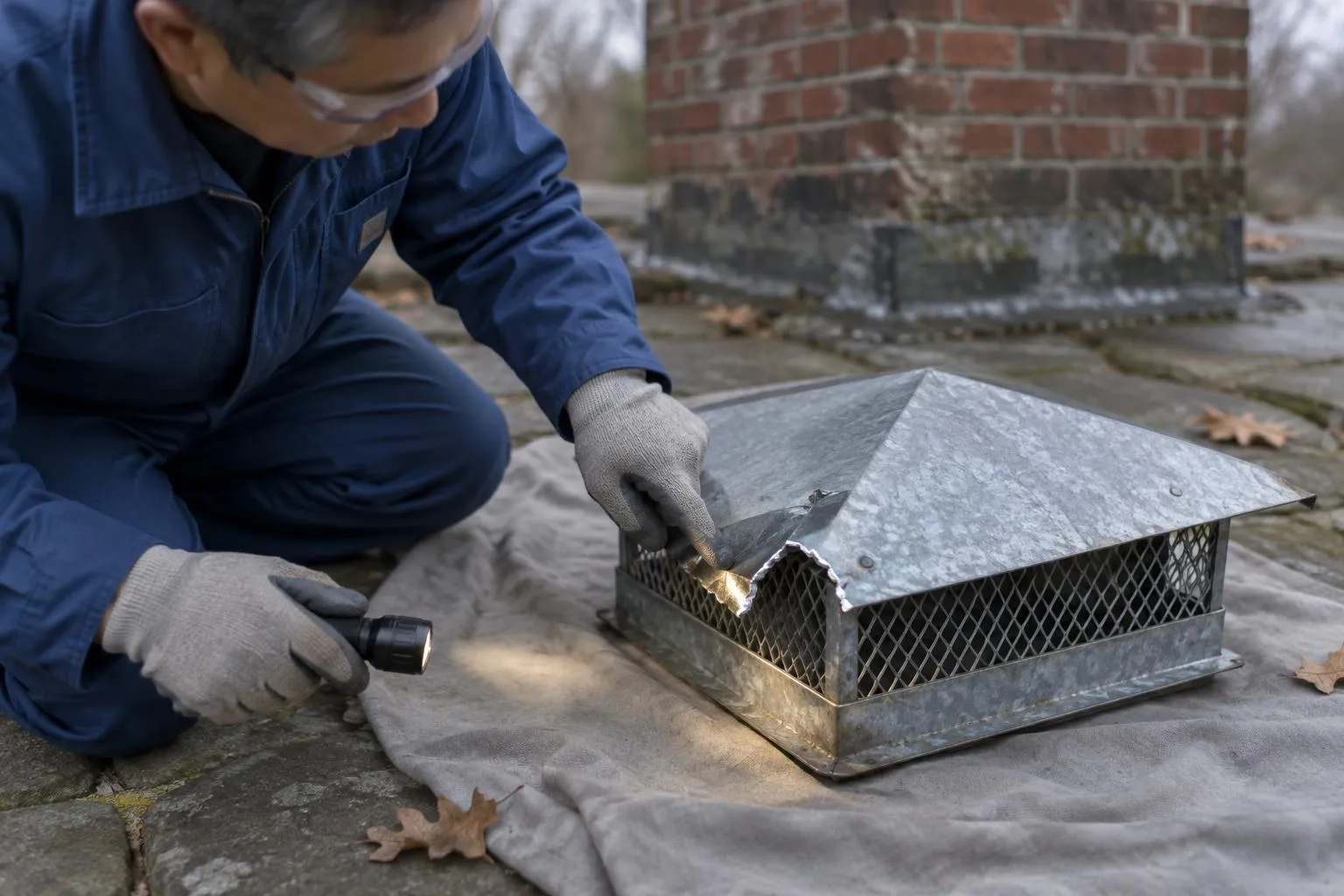
The trap: Many homeowners assume a clean chimney is a safe chimney. It’s not. You can sweep a flue and still have a crack in the liner, animal damage in the cap, or deteriorating mortar that’s quietly leaking carbon monoxide into your home.
Reality Check:Creosote buildup causes over 50% of chimney fires, and a sweep removes that. But the other 50%? Structural damage, poor installation, and neglected repairs. That’s what an inspection catches.
Why Both Matter (And the Numbers Prove It)
The National Fire Protection Association (NFPA) estimates that chimney fires cause roughly 20,600 home fires annually in the US. The Chimney Safety Institute of America (CSIA) breaks down the blame: 36% occur due to neglected maintenance.
That’s not “neglected sweeping.” That’s neglected inspections.
Here’s the hierarchy:
| Service | What It Does | Frequency | Cost (2024-25) |
|---|---|---|---|
| Sweep | Removes creosote, soot, animal nests, debris | 1–2x/year (wood); annually or less (gas) | $150–$300 (standalone) |
| Level 1 Inspection | Visual check of accessible areas; basic safety assessment | Annually for unchanged systems | $100–$200 (standalone) |
| Level 2 Inspection | Video camera scan + structural assessment; required for real estate sales, fuel changes, or post-damage | After events or before sale | $300–$500 (standalone) |
| Level 3 Inspection | Disassembly for suspected hazards; highest detail | Case-by-case (serious damage) | $500–$1,000+ |
| Bundled Sweep + Level 1 | Cleaning + basic inspection | Annually | $250–$500 (20–30% savings) |
Wood-burning homes need sweeping 1–2 times per year because creosote accumulates fast. Gas fireplace users can often get away with annual sweeping or less. But both need the inspection.
Pro Tip:Most CSIA-certified sweeps include a basic Level 1 inspection during their cleaning—it’s visual and happens while they’re already there. That’s not the same as a dedicated inspection, but it’s a start.
What You’re Actually Risking
Here’s the real-world damage when one service skips the other:
When you only sweep: A client in San Antonio had an immaculate sweep report but developing masonry failure in his chimney stack. The sweep never looked for it. By the time a dedicated inspector found it during a Level 2 scan, the brick deterioration had spread—and a full rebuild cost him $3,000+ instead of a $500 early repair.
When you only inspect: Rarer, but it happens. An inspector notes “excessive creosote,” but some homeowners delay the sweep thinking they can schedule it “next month.” That’s when fires happen. One homeowner’s neglect turned into a mid-flue fire that cracked the liner—a $10,000 repair that an immediate sweep would have prevented.
The hidden crack scenario: This is the big one. A Level 1 visual sweep might miss flue cracks entirely, especially interior ones. A Level 2 camera inspection after a storm revealed flue gaps that would’ve slowly leaked carbon monoxide. The homeowner never would’ve known.
The Real Cost—And Why Bundling Matters
Pricing is straightforward if you know where to look:
- Sweep alone: $150–$300 nationally (higher in urban areas: $250–$450)
- Level 1 inspection alone: $100–$200
- Bundled sweep + Level 1: $250–$500 (the sweet spot)
If you book them separately, you’re paying $250–$500 combined. If you bundle, you’re saving 20–30% on labor and scheduling. More importantly, you get both services in one trip instead of coordinating two appointments.
For real estate transactions or post-damage assessment, you’ll need a Level 2 inspection ($300–$600 bundled with the sweep). That’s a different animal—the camera work reveals what eyes alone can’t.
Reality Check:A lot of home inspectors claim they’ll check your chimney during a general inspection. Most can’t. They lack the expertise and tools. You need a CSIA-certified pro for compliance with NFPA 211 standards.
When Do You Actually Need What?
Annual routine (wood burner):
- Sweep: Yes, 1–2x/year
- Level 1 Inspection: Yes, annually (often bundled with sweep)
- Cost: $250–$500/year for the combo
Annual routine (gas fireplace):
- Sweep: Annually or less (check your manual)
- Level 1 Inspection: Yes, annually
- Cost: $250–$400/year
Before selling your home:
- Sweep: Yes
- Level 2 Inspection: Mandatory (buyers’ inspectors will catch issues anyway; better to find and fix them first)
- Cost: $400–$600 bundled
After a storm or chimney fire:
- Sweep: Yes
- Level 2 or Level 3 Inspection: Absolutely (assess damage)
- Cost: $500–$1,200+ depending on damage
If you notice: Smoky odors, tar flakes around the fireplace, slow draft, or animal activity—call a CSIA-certified sweep immediately. Then schedule an inspection.
How to Pick the Right Pro
The difference between a “chimney guy” and a real technician comes down to certification. Look for CSIA-certified professionals—they’re trained on NFPA 211 standards and required to document findings clearly.
Red flags:
- A sweep who says “I’ll do a full inspection while I’m at it” without using a camera or detailed reporting
- A low-price sweep ($100 or less) bundled with inspection—corner-cutting likely
- Anyone who won’t provide written findings or photos
Green flags:
- CSIA certification listed on their site
- Clear breakdown of what each service includes
- Written report with photos or video
- Insurance and licensing displayed upfront
For city-specific services, search “[your-city] CSIA chimney sweep” or check the CSIA directory directly.
Practical Bottom Line
You need both services, and here’s how to approach it:
Step 1: Book a bundled sweep + Level 1 inspection annually (spring for wood burners, fall for gas). Cost: $250–$500.
Step 2: If you’re selling, planning a fuel change, or experienced a storm or fire, schedule a Level 2 inspection separately. Cost: $300–$600.
Step 3: Choose a CSIA-certified pro, not just whoever’s cheapest. The difference between a sloppy sweep and a thorough one is the difference between avoiding a fire and not.
Step 4: Keep records. Insurance companies want proof of maintenance.
The short version my neighbor learned the hard way: A clean chimney isn’t the same as a safe one. A sweep keeps the fire out of your flue. An inspection keeps the fire out of your walls.
Get both.
Want the full breakdown? Check out our Complete Guide to Chimney Inspectors for deeper dives into inspection levels, what to expect, and how to read a report.
Done reading? Get quotes from chimney inspectors near you.
Takes about a minute. Free, no obligation; providers reply to you directly.
Popular cities: